10 Best Google Analytics Alternatives for 2026
The top privacy-friendly Google Analytics alternatives to look out for in 2026. An objective breakdown of features, pricing, and privacy.

Daryl
Founder
Google Analytics has been the go-to for website analytics for over a decade. For a lot of companies, it's all they know, and all they're familiar with. It's generally free and comes packed with a range of powerful features, which sounds desirable on the surface, but there's a twist.
There's a reason why Google hasn't killed Google Analytics off like many of their other products. Using it allows Google to collect visitor behavior data. While that data is used to provide your reports, certain configurations can also feed Google's ads ecosystem, especially for audience building and conversion measurement.
A lot of people are not a fan of being tracked in a way that they don't understand, or being silently monetized without their consent.
The good thing is, people are starting to wake up and care more about their privacy, and that's caused an explosion of new privacy-friendly analytics tools over the last few years.
Some focus on privacy. Others keep things simple. A few try to do it all. How do you know which one is the best for you?
With that in mind, I'm going to breakdown the 10 best Google Analytics alternatives to use in 2026. But first, let's explore what a privacy-friendly analytics tool is, and why you might want to consider one.
What is a privacy-friendly analytics tool?
It's analytics without the heavy baggage. No cookies. No personal data collection. No tracking people across the web. You get the traffic insights you need while your visitors stay completely anonymous.
The practical benefit? You don't need cookie consent banners. Under GDPR, consent is only required when you're collecting personal data. If you're not collecting it in the first place, there's nothing to consent to. It's a simpler setup and a better experience for everyone who visits your site.
It's much more respected.
1. Visitors
I built Visitors because I wanted privacy-friendly analytics that went deeper than basic traffic stats. Most tools in this space just give you pageviews and referrers. That's useful, but it doesn't tell you much about how people actually use your site.
Visitors is cookie-free by default, GDPR compliant out of the box, and all data gets processed in the EU. But privacy is just the baseline. What makes it different is everything else.
The realtime is actually realtime. Events stream via WebSockets the moment they happen. You can watch visitors arrive on an interactive globe, click any marker to see what page they're on, what device they're using, who referred them. There's something special about watching this during a product launch.
Every visitor gets a profile showing their complete journey. What pages they viewed, in what order, how long they stayed. You get behavioral insights without recording screens.
We also track Core Web Vitals from real users. Not synthetic Lighthouse scores, but actual performance data from the people visiting your site. Broken down by page, country, and device.
Pricing starts at $9/month for 10k events. Unlimited websites, unlimited team members, 14-day free trial, no credit card required.
2. Plausible
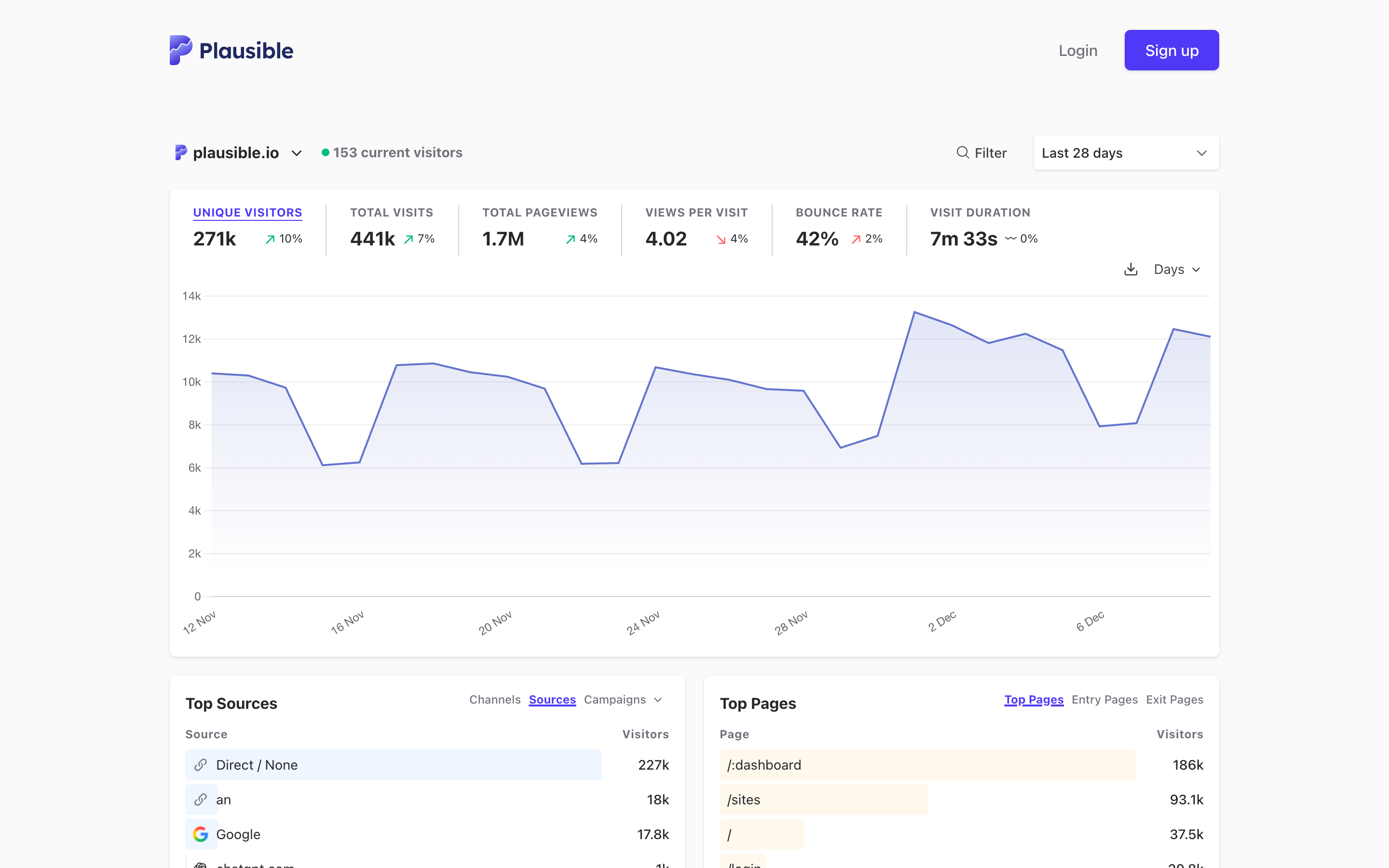
Plausible is probably the most well-known privacy-friendly analytics tool right now. It's simple, lightweight, and does exactly what it says on the tin. No cookies, no personal data, GDPR compliant out of the box.
The dashboard is slick, and set the tone for a lot of analytics tools you see today. You get pageviews, unique visitors, referrers, top pages and everything loads fast. They're also open source, which I respect.
Pricing starts at $9/month for 10k pageviews. You can self-host if you want full control, though that means handling your own infrastructure which can be a lot of work (we know).
Where it falls short is depth. There's no visitor profiles or journey tracking, no performance tracking, and the realtime view polls every few seconds rather than streaming. If all you need is basic traffic stats, Plausible is great. If you want to understand how individual visitors move through your site, you'll hit the ceiling pretty fast.
3. Fathom
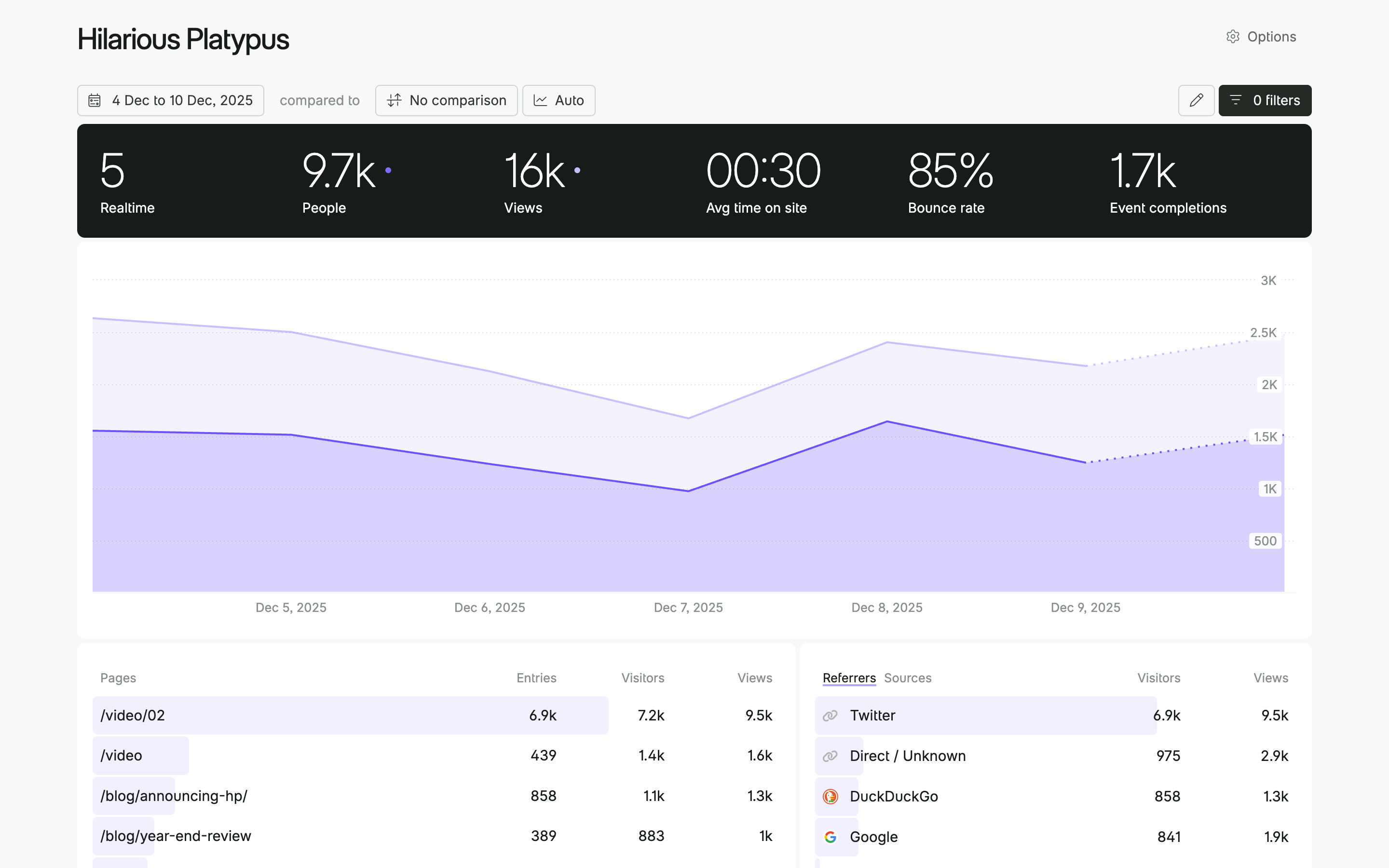
Fathom has been around since 2018, founded by just 2 guys and has built a loyal following, especially among indie makers. The pitch is similar to Plausible. It's simple, privacy-focused, and doesn't require cookies.
The interface is minimal and fast. You get pageviews, visitors, referrers, top pages, etc. They handle GDPR exceptionally well so you know your data is in good hands.
Pricing starts at $15/month for 100k pageviews. That's more generous on raw numbers than some competitors, but it doesn't offer anything lower which is a shame for smaller sites.
The limitations are the same as Plausible though. No visitor profiles. No journey tracking. No performance metrics. The realtime view is lacking, it just shows you the pages and sources, that's it.
Fathom is built for people who want to check their traffic numbers occasionally and move on. If that's you, it works well.
4. Simple Analytics
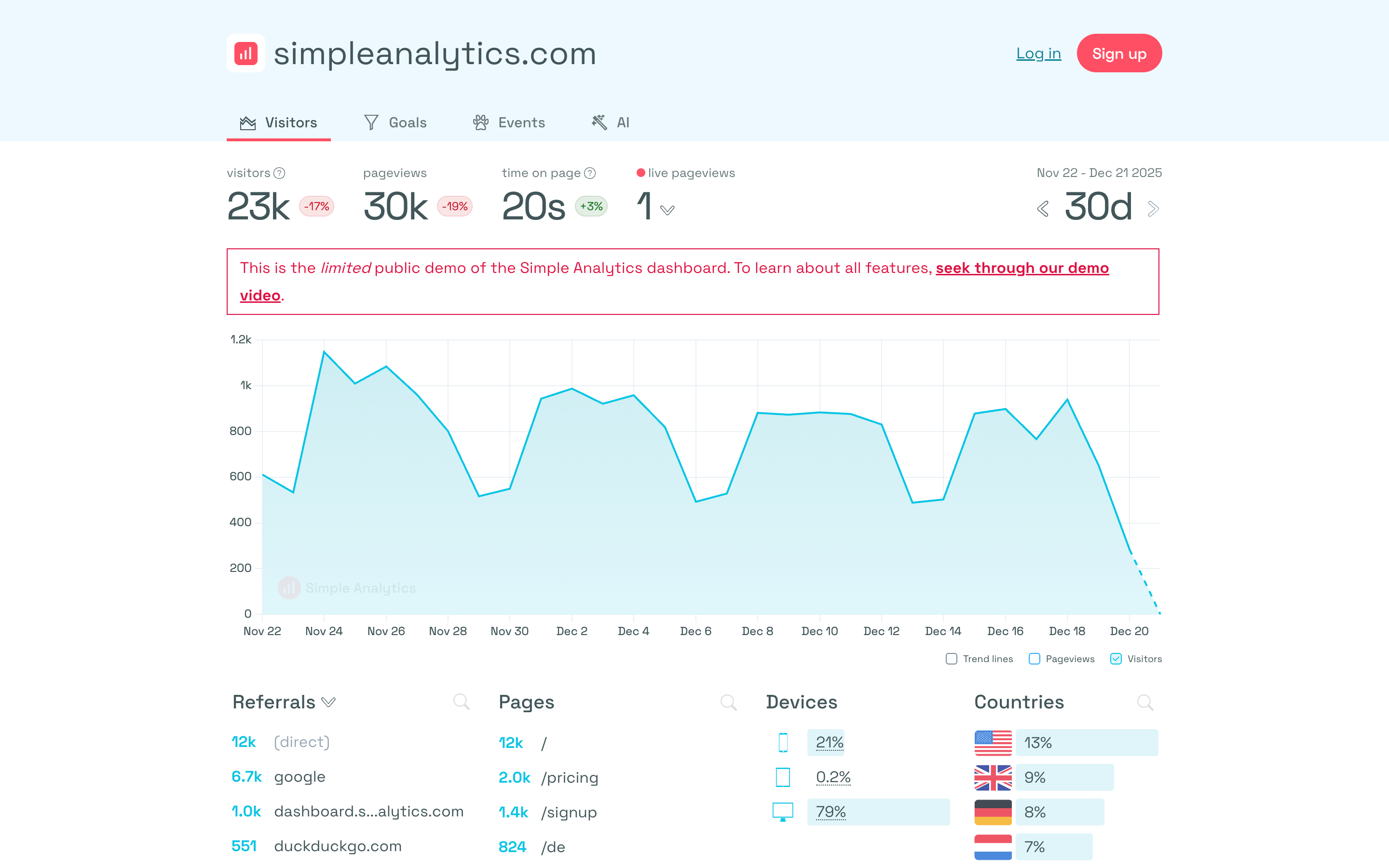
Simple Analytics is as, well, simple as it gets. You get pageviews, referrers, countries, etc. You know, the usual stuff.
The dashboard is incredibly bare bones and loads fast, and the stats are easy to digest at a glance. They're based in the Netherlands, they don't use cookies and they're fully GDPR compliant as expected.
Pricing is generous and starts at $9/month for 100k pageviews. They even have a free tier for smaller sites which you don't see too often.
There's not much beyond the basics though. No visitor profiles, no performance tracking. If you're running a blog and just want a sense of how many people are showing up, Simple Analytics handles that well. They even use WebSockets which is a big plus. But if you're looking to understand how visitors actually move through your site, you'll find yourself wanting more pretty quickly.
5. Umami
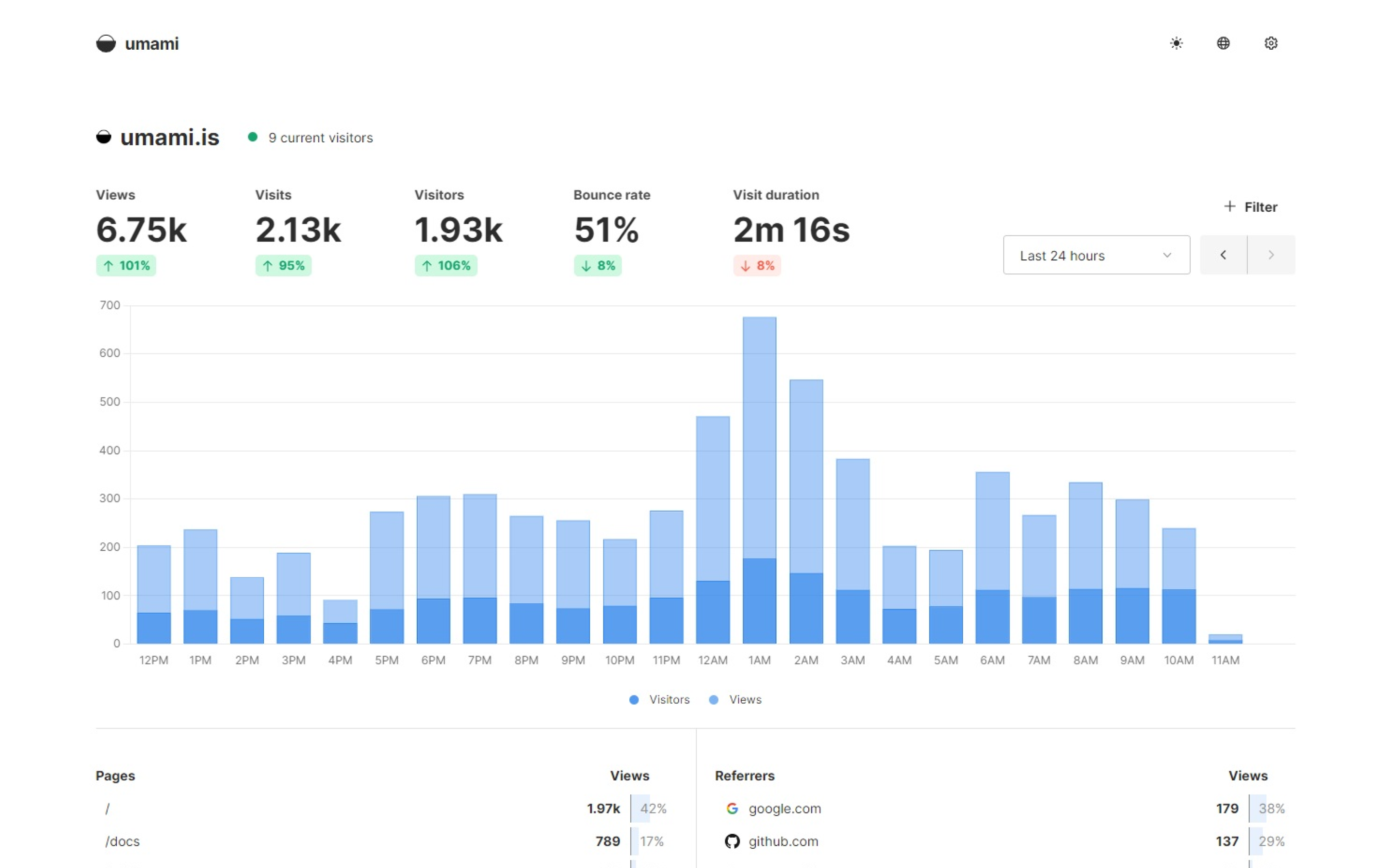
Umami is the best option if you're a developer who wants to self-host. It's completely open source, easy to deploy, and the interface is pretty clean and modern.
Since you're hosting it yourself, you control everything. No third party involved. You can run it on a cheap VPS for a few dollars a month, which makes it one of the most cost-effective options out there.
The downside is that self-hosting is work. You're responsible for backups, updates, security, scaling. There's no support team when something breaks at 2am. Features are also more limited than the paid alternatives as there's no visitor profiles, and no performance tracking.
If you want full control and don't mind maintaining servers, Umami is great. If you'd rather just pay someone and have it work without all the hassle, look elsewhere.
6. PostHog
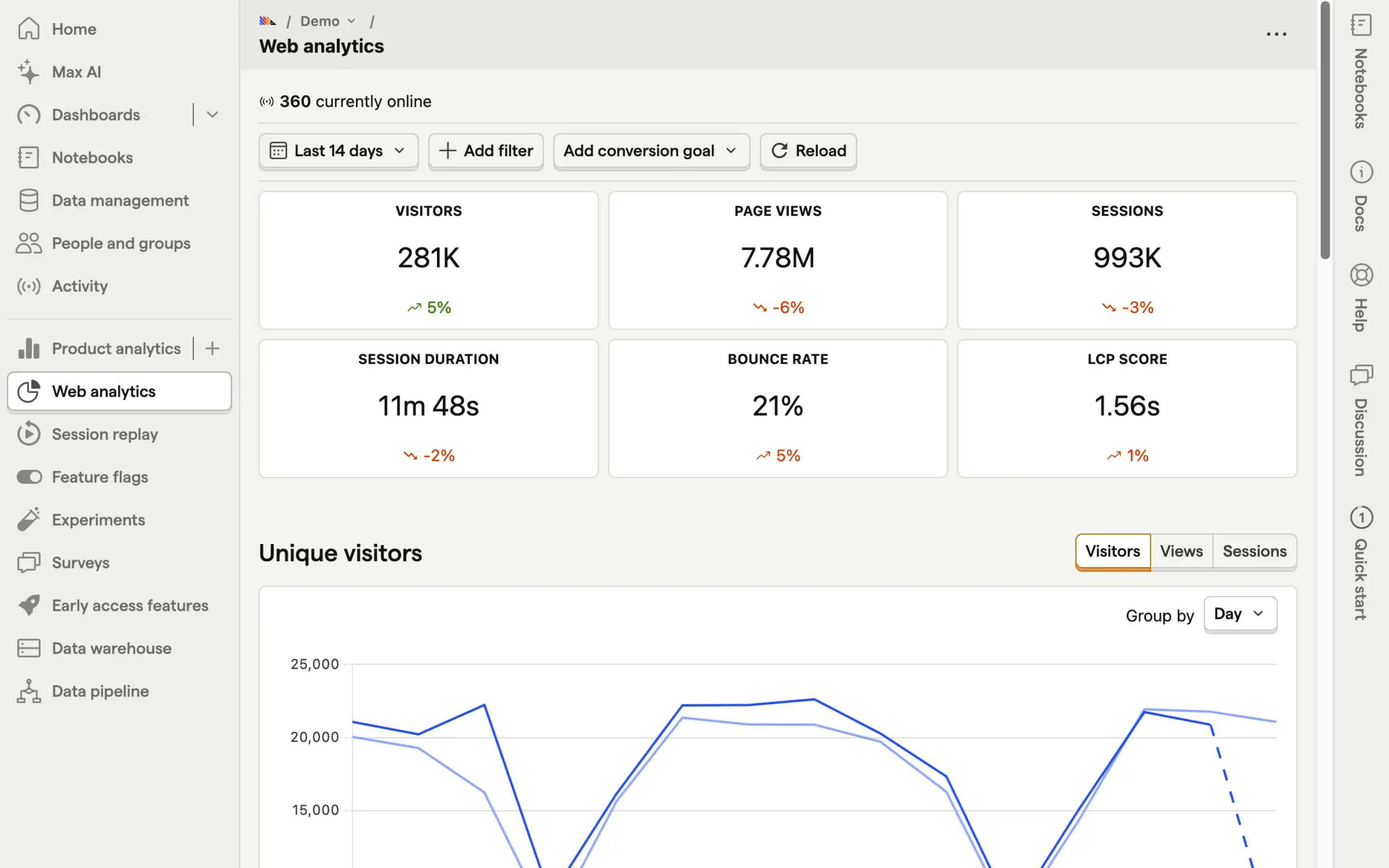
PostHog isn't really a Google Analytics replacement. It's a full product analytics suite. Session replay, feature flags, A/B testing, funnels, the works. If you're building a SaaS and want to understand user behavior deeply, it's powerful.
They have an extremely generous free tier with 1 million events per month. The product is open source and you can self-host if you want.
The tradeoff is complexity. This is not a simple tool. The learning curve, like Google Analytics, is very steep. The interface is dense, and borderline overkill if you just want to track website traffic. But if you're building a product and want analytics, experimentation, and session replay in one platform, PostHog is worth considering.
7. Matomo
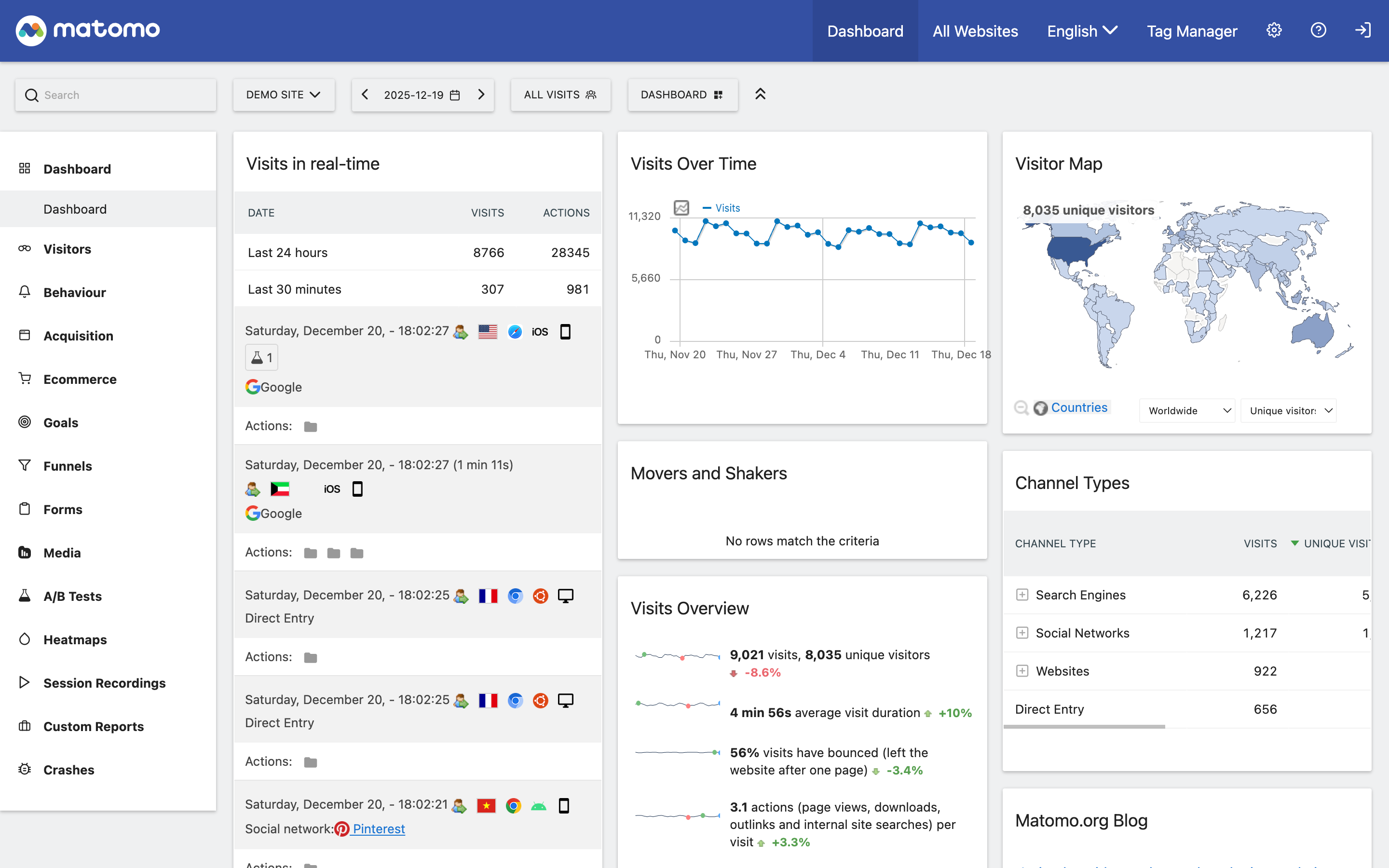
Matomo used to be called Piwik. It's been around since 2007, which makes it one of the oldest alternatives on this list. It's open source and aims for feature parity with Google Analytics.
The feature set is comprehensive. Custom reports, funnels, heatmaps, session recording, A/B testing and more. It's popular with governments, universities, and large organizations that need serious analytics without sending data to Google.
The downside is that it feels dated. The interface hasn't aged well compared to newer tools. That and setup can be complex, especially if you're self-hosting. Cloud pricing starts at €19/month but scales up fast.
Matomo is powerful, but it's not simple. The learning curve is steep, and it's best for organizations that need enterprise features and have the time to configure everything properly.
8. Mixpanel
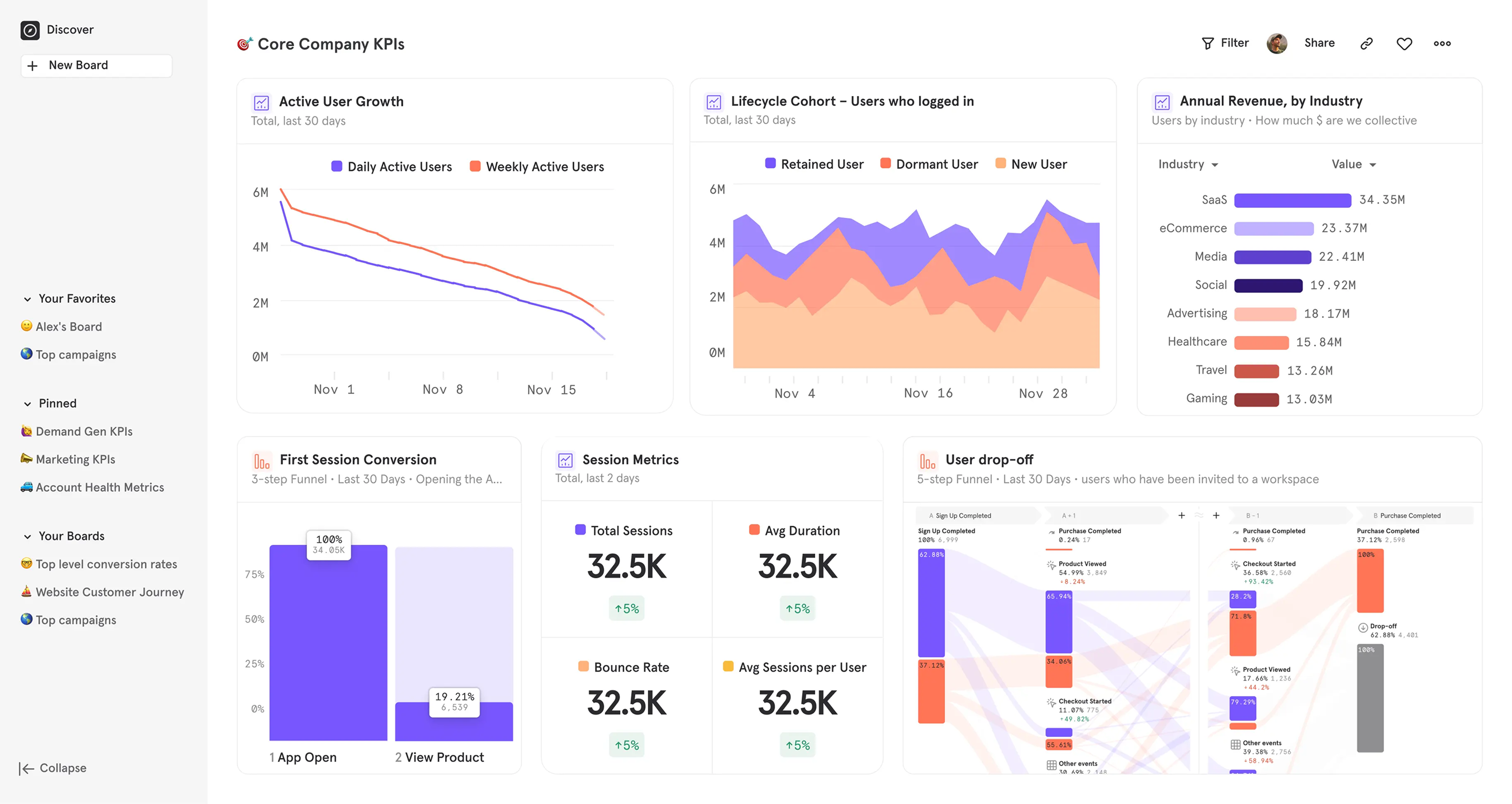
Mixpanel is product analytics, not web analytics. It's designed to track user actions inside apps. What percentage of users who signed up completed onboarding? How many clicked this button? That kind of thing.
The free tier is insanely generous at 20 million events per month. Paid plans add more collaboration features than anything.
Here's the thing though. Mixpanel isn't really a Google Analytics alternative. It's not designed for tracking website traffic. You won't get simple pageview counts or referrer data without custom work. If you're building a SaaS product, it's excellent. If you're running a marketing site or blog, it's the wrong tool.
9. Cloudflare Web Analytics
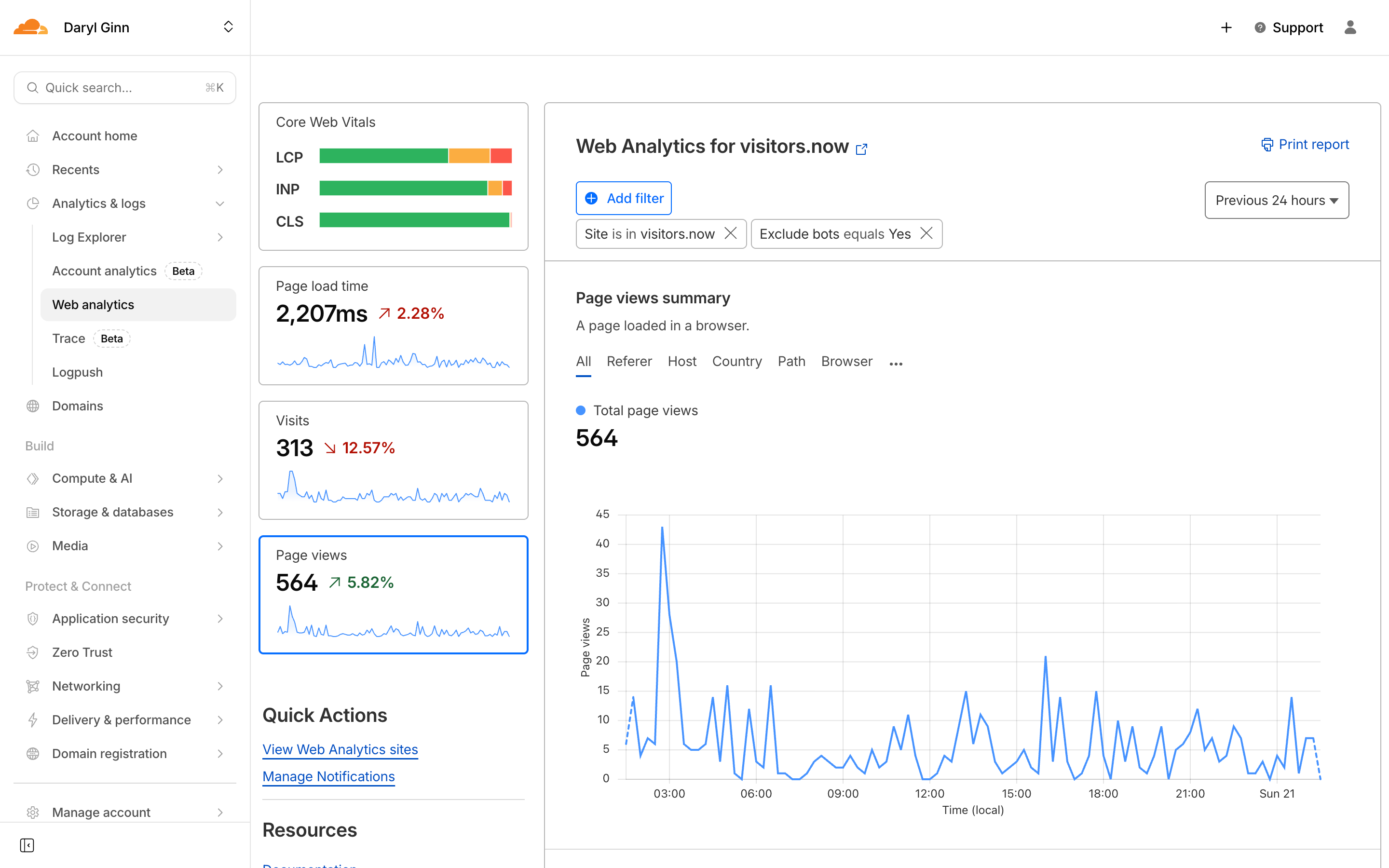
Cloudflare Web Analytics is free. Completely free, no limits. If you're already using Cloudflare for your site, you can turn it on in seconds.
It's privacy-focused, which means no cookies, and it doesn't slow down your site. You get the usual pageviews, visitors, top pages, referrers, etc.
It does have performance insights, but that's about where it ends. The data is basic and there's almost no customization. No custom events, no visitor profiles, etc.
It's a good free option for personal projects or as a secondary tool alongside something more capable. But if you're running a real business, you'll probably want more.
10. Pirsch
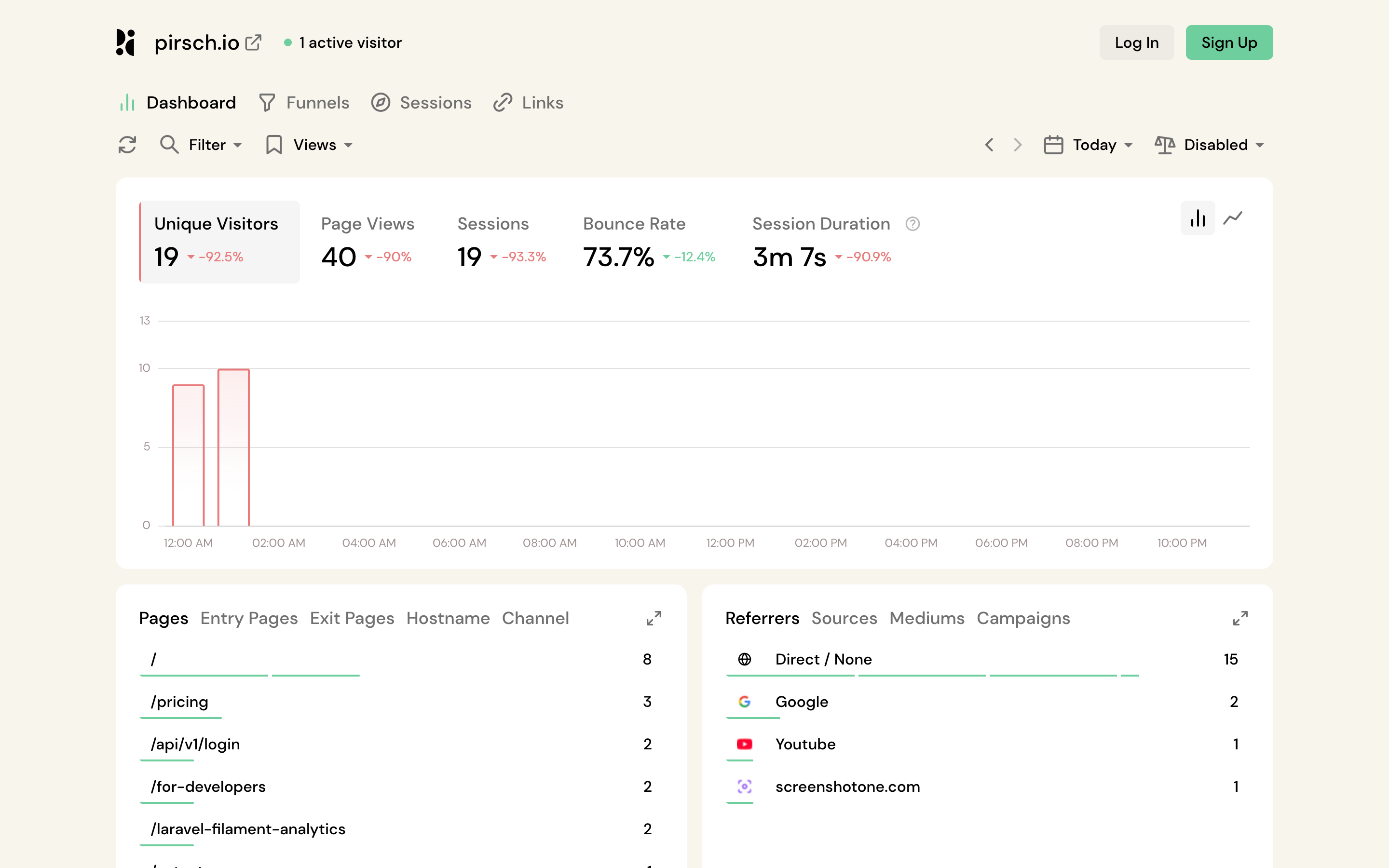
Pirsch is a German privacy-focused analytics tool that's been quietly growing over the past few years. It's cookie-free, GDPR compliant, and all data stays in the EU.
The dashboard is clean and modern. You get the usual pageviews, referrers, cities etc. as well as custom events and goals. Nothing revolutionary, but it's well executed and easy to use.
Pricing starts at €5/month for 10k pageviews, which makes it one of the more affordable options. They also have a free tier for smaller projects.
They do have a form of visitor profiles that shows session history and journeys, but it's not the easiest to digest. There's no performance tracking either. But if you want something simple, European, and affordable, Pirsch is a solid choice.
Which one should you choose?
Well, like everything in life, it depends. What do you actually need?
If you want privacy-friendly analytics with realtime streaming, visitor profiles, and performance insights, I'd obviously recommend Visitors. That's what I built it for.
If you want something simpler and don't care about individual visitor data, Plausible or Fathom will do the job. If you're technical and want full control over your infrastructure, self-host Umami. If you're building a SaaS and need deep product analytics, look at PostHog or Mixpanel.
Whatever you pick, moving away from Google Analytics is a good call. Better privacy for your visitors, simpler setup for you, and you're not feeding data into an advertising machine.
The analytics space has grown up. You don't have to choose between privacy and useful insights anymore.